Clean Energy
In many low-income households across Kenya, lighting is not just a utility; it’s a window into the realities of poverty. Most poor households rely on wick-based kerosene lamps or open flame setups, which are not only inefficient, but also expose families to health hazards and fire risks.
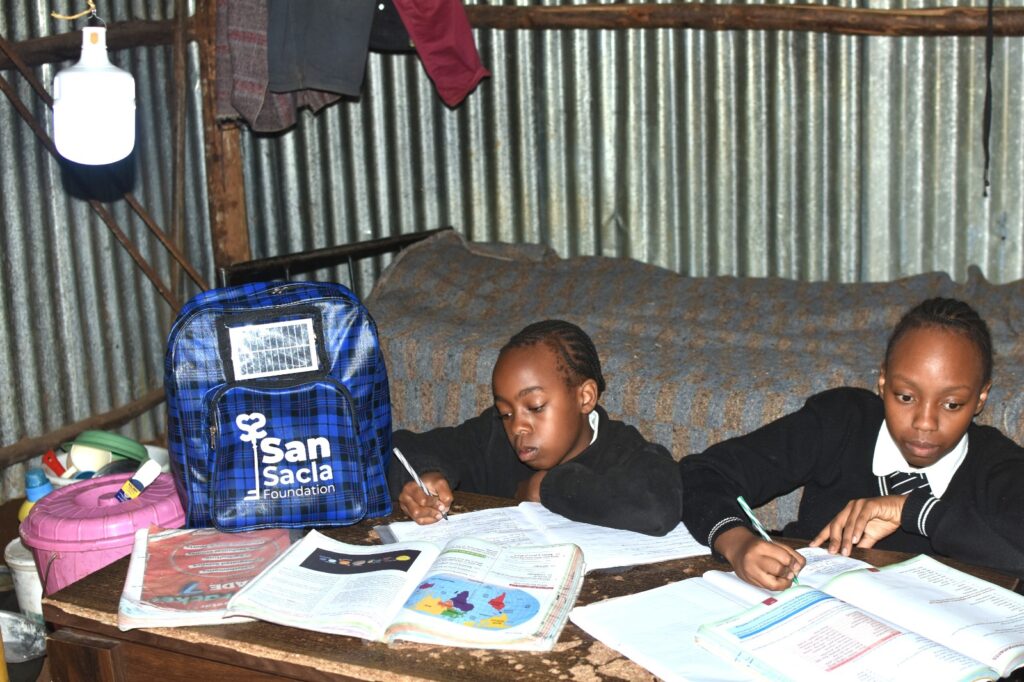
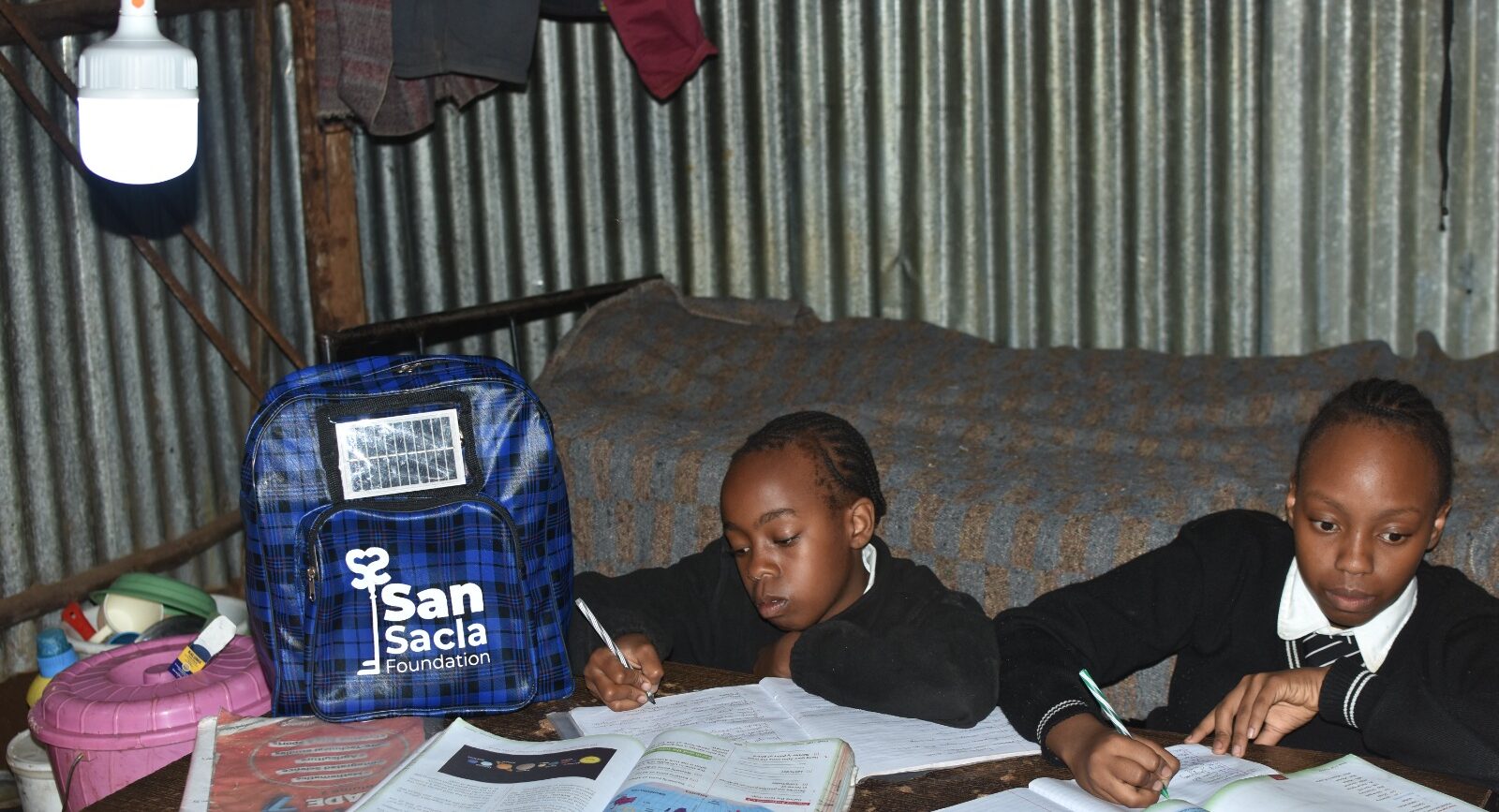
These traditional sources emit toxic fumes that can cause respiratory problems, eye irritation, and long-term health risks, particularly for children. Economically, households are forced to spend scarce income on kerosene, diverting funds that could otherwise go toward food, school fees, or healthcare. Without safe and steady lighting, students have little opportunity to study after dark, hindering their academic performance and long-term potential.
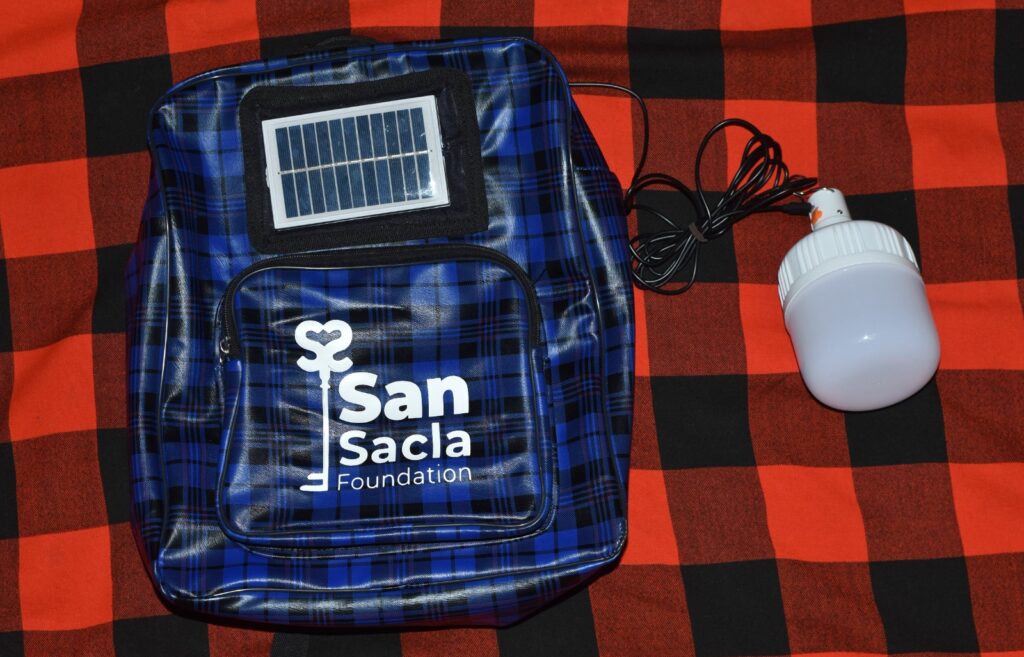
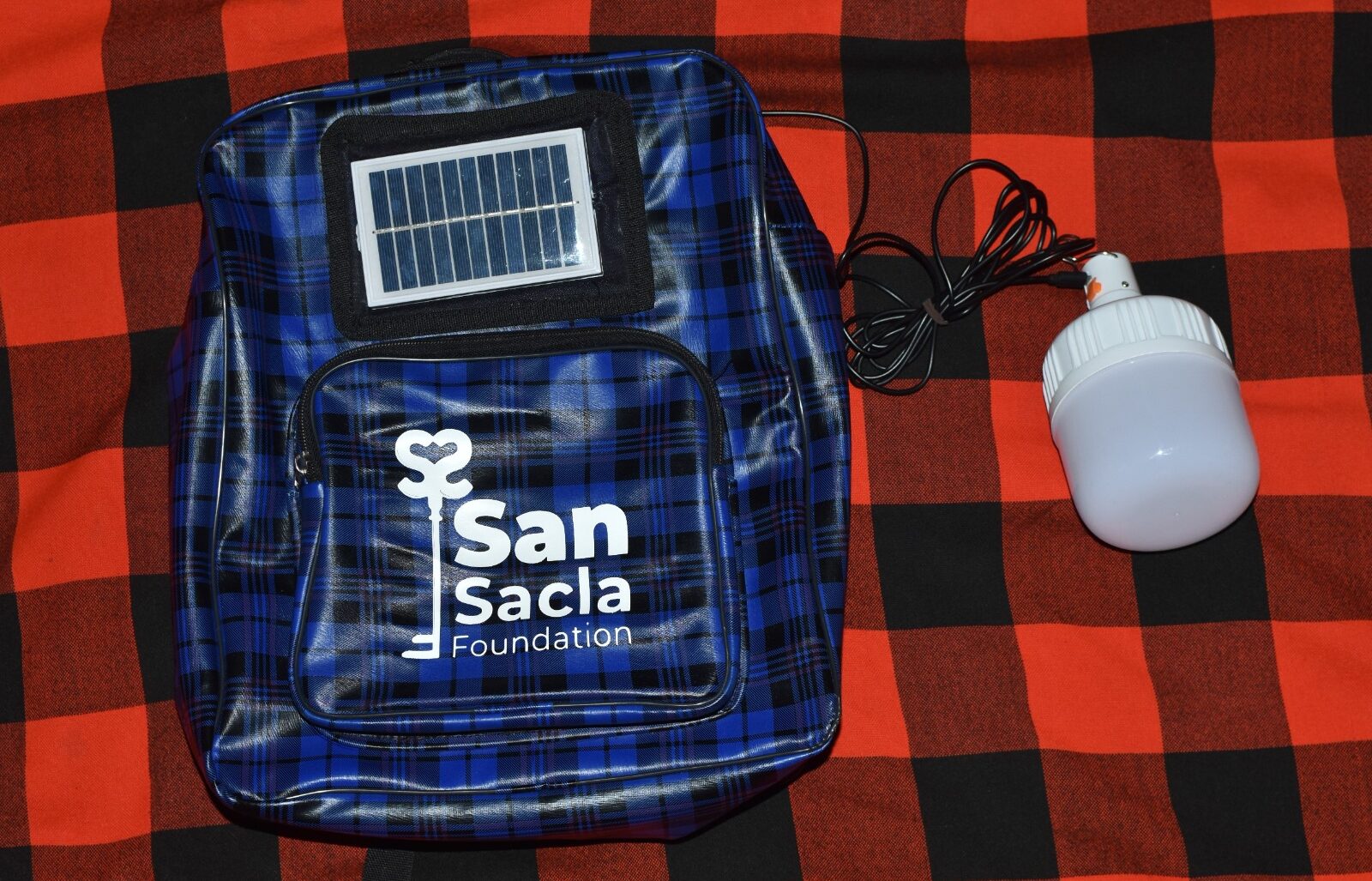
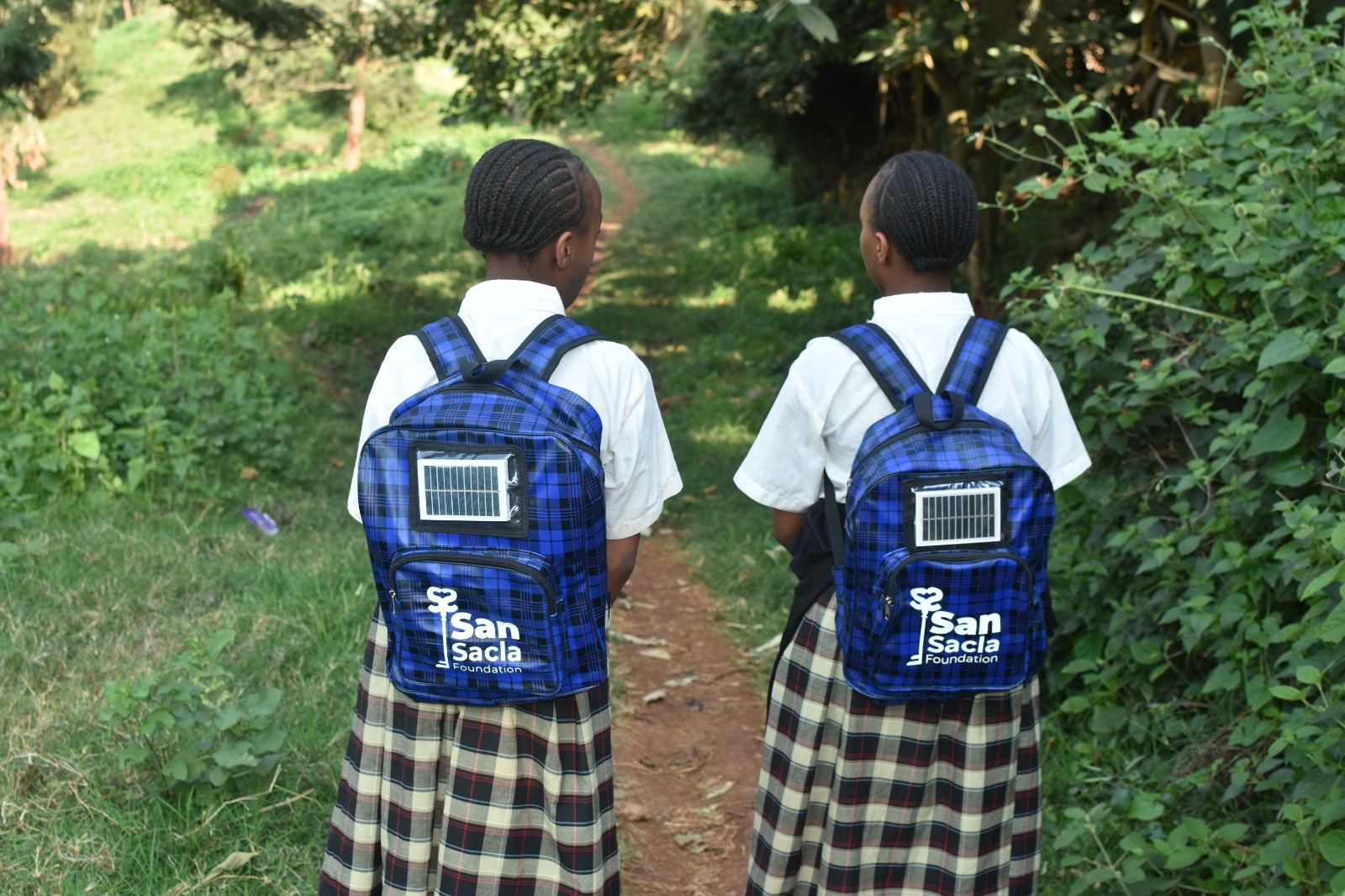
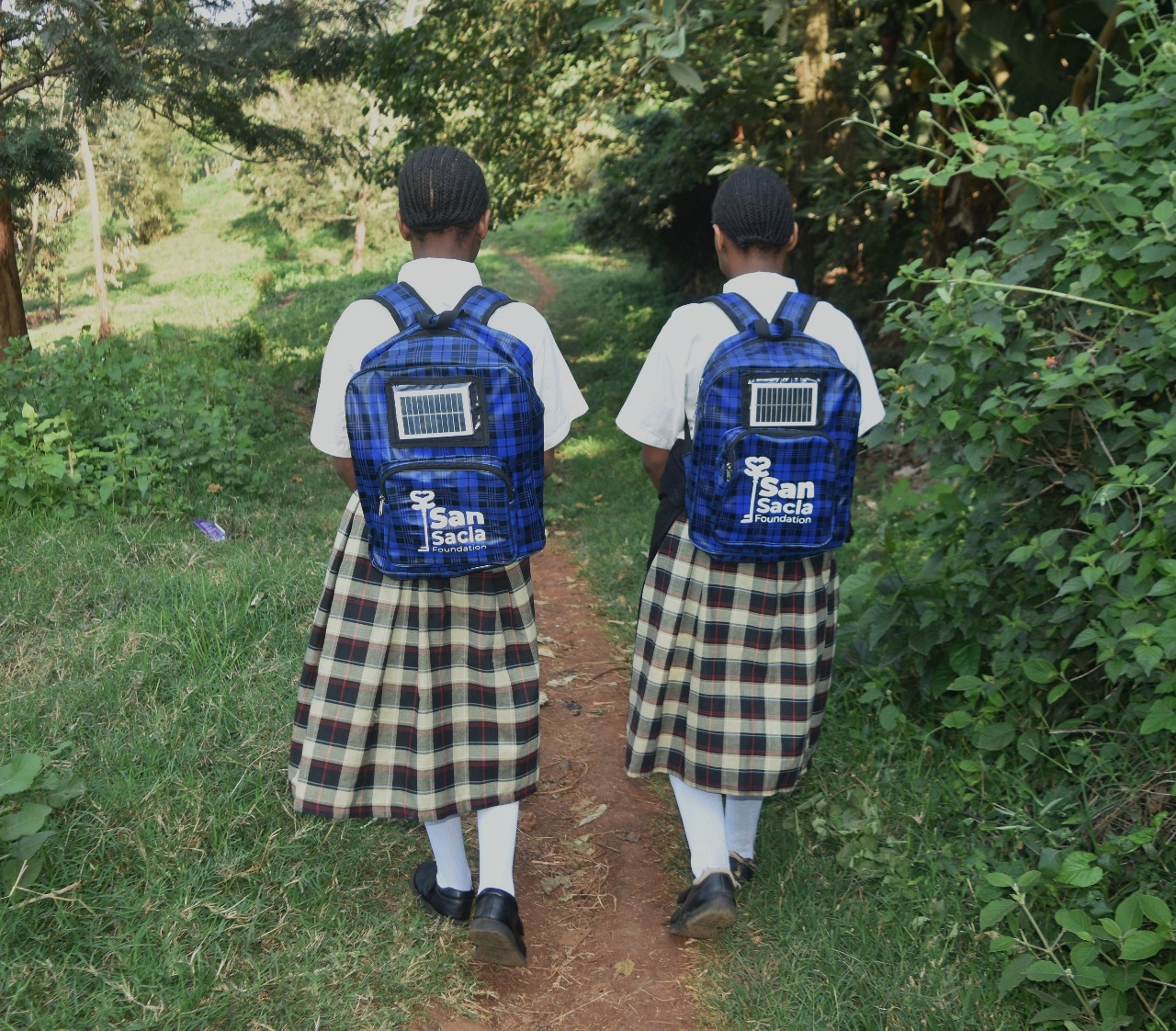
San Sacla Foundation addresses this challenge through the Eco-Soma Solar Pack, a clean energy solution aligned with the United Nations Sustainable Development Goal 7, which promotes access to affordable, reliable, and modern energy for all. By providing safe, solar-powered lighting, the Eco-Soma Solar Pack offers families a healthier, more affordable, and environmentally sustainable alternative.